
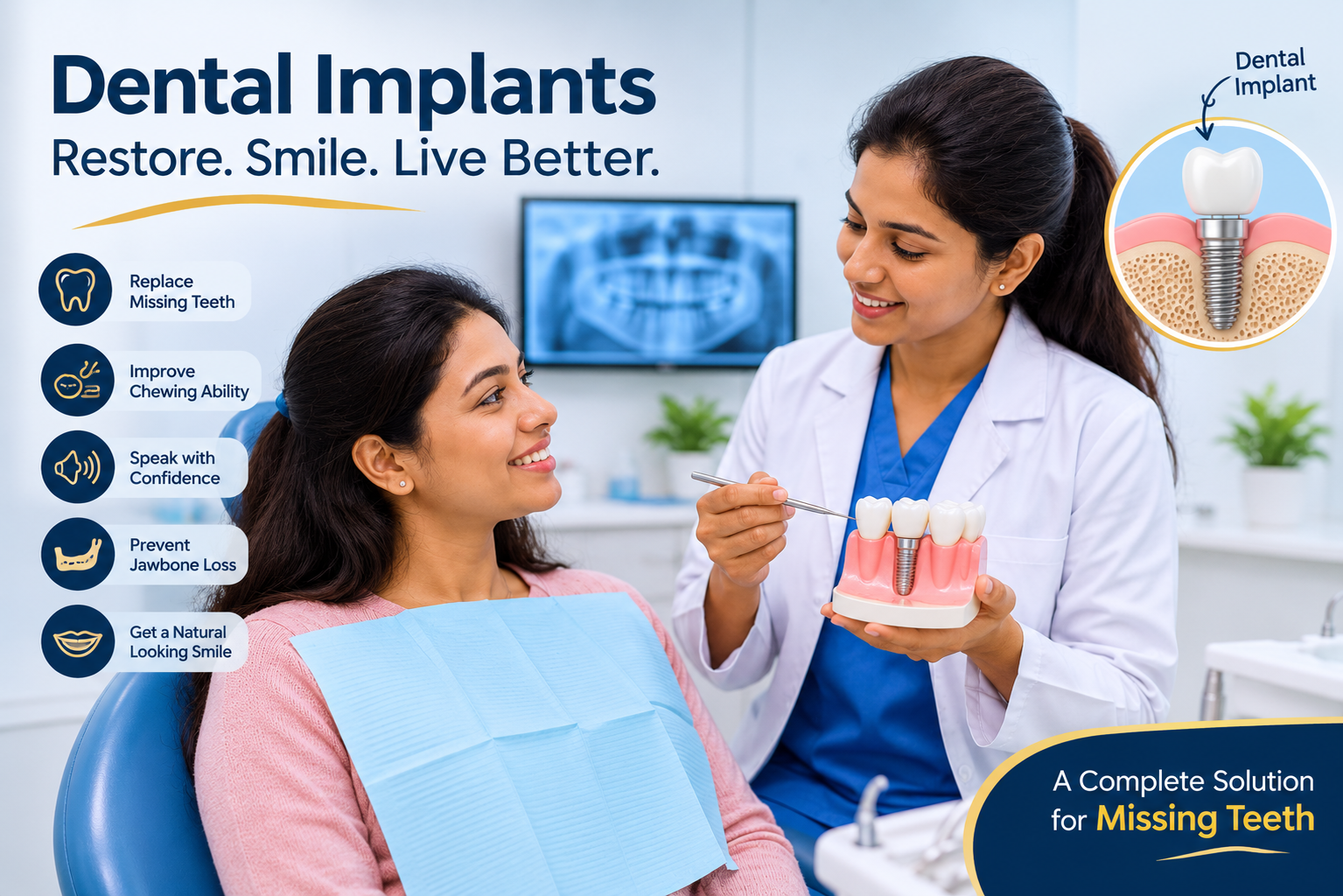
Missing teeth can affect several aspects of everyday life, including chewing, speaking, oral hygiene and facial appearance. Tooth loss may occur due to dental decay, gum disease, accidental injuries or other oral health conditions. Replacing missing teeth is important not only for restoring appearance but also for maintaining proper oral function.
Dental implants are an established treatment option for replacing missing teeth. They provide a stable foundation for artificial teeth and can be used to replace a single tooth, multiple teeth or support a complete dental prosthesis. However, implant treatment involves careful evaluation, appropriate planning and long-term maintenance.
Understanding how dental implants work, who may benefit from them and what the treatment involves can help patients make informed decisions about their oral health.
What Are Dental Implants?
A dental implant is a small post, usually made from titanium or a titanium alloy, that is surgically placed into the jawbone to replace the root of a missing tooth. Over time, the surrounding bone attaches to the implant through a biological process known as osseointegration.
Once sufficient stability has been achieved, the implant can support an artificial tooth or other dental restoration.
A conventional dental implant restoration generally consists of three main components:
Implant fixture: The post placed inside the jawbone that provides support for the replacement tooth.
Abutment: The connector that joins the implant fixture to the artificial tooth.
Dental crown: The visible replacement tooth, designed to restore the appearance and function of the missing tooth.
Depending on the patient's condition, implants can also support dental bridges and implant-retained dentures.
Unlike conventional removable dentures, implant-supported restorations are anchored to implants placed in the jawbone. They are designed to provide stability and restore important aspects of chewing function.
Why Is Replacing Missing Teeth Important?
A missing tooth can affect more than the appearance of a smile. It may change how the remaining teeth function and interact with one another.
Some possible consequences of untreated tooth loss include:
Difficulty chewing: Missing teeth may make it harder to bite and chew certain foods, potentially affecting everyday eating habits.
Movement of neighbouring teeth: Adjacent teeth may gradually shift towards the empty space, affecting tooth alignment.
Changes in bite: Tooth loss can influence how the upper and lower teeth meet during chewing.
Jawbone changes: The bone that previously supported the missing tooth may gradually lose volume because it no longer receives normal stimulation from the tooth root.
Speech difficulties: Depending on the location of the missing tooth, pronunciation and speech clarity may be affected.
The effects vary between individuals. A dental examination helps determine whether tooth replacement is necessary and which treatment options are appropriate.
Dental Implants, Bridges and Dentures: What Is the Difference?
Dental implants are one of several options for replacing missing teeth. Bridges and removable dentures are also commonly used, depending on the patient's oral health and treatment requirements.
Dental Implants
Implants are placed in the jawbone and provide support for artificial teeth.
They can replace individual teeth without normally requiring preparation of neighbouring healthy teeth. They also help maintain bone stimulation at the implant site.
However, implant treatment requires surgery, sufficient supporting bone and a commitment to long-term oral hygiene.
Dental Bridges
A dental bridge replaces missing teeth by using neighbouring teeth or other suitable supporting structures.
Bridges provide a fixed replacement and may involve a shorter treatment period than implants in suitable cases. However, conventional bridges generally require preparation of the supporting teeth and do not replace the natural tooth root.
Removable Dentures
Dentures are removable appliances designed to replace a few missing teeth or an entire set of teeth.
They are often less invasive than implant treatment and can replace multiple missing teeth. However, they may move during eating or speaking and require regular cleaning and adjustments.
The choice between these treatments depends on the number of missing teeth, bone condition, gum health, medical history, personal preferences and financial considerations. A dentist should explain the advantages and limitations of each option before treatment begins.
Who Is Suitable for Dental Implant Treatment?
Many adults with missing teeth may be suitable candidates for dental implants. However, suitability must be determined through a clinical examination.
Several factors are considered during the assessment:
Jawbone condition: Adequate bone volume and density are important for supporting an implant. If the available bone is insufficient, procedures such as bone grafting may be considered.
Gum health: Existing gum disease should be assessed and treated before implant placement. Healthy supporting tissues are important for maintaining implant stability.
General health: Medical conditions and medications that influence healing must be reviewed. For example, poorly controlled diabetes may increase the risk of complications.
Smoking and tobacco use: Smoking can interfere with healing and increase the risk of implant-related complications. Patients should discuss tobacco use with their dentist before treatment.
Oral hygiene: Patients must be able to maintain good daily oral hygiene and attend regular dental appointments.
Bite and jaw function: The way the teeth meet and the forces placed on the proposed restoration are also important considerations.
Age alone does not determine suitability. Overall health, jaw development, oral hygiene and individual clinical conditions are more important factors.
Understanding the Dental Implant Procedure
Dental implant treatment generally involves several stages. The exact procedure and duration depend on the patient's oral health, bone condition and treatment complexity.
1. Initial Consultation and Examination
The process begins with a detailed examination of the teeth, gums and supporting bone. The dentist reviews the patient's medical and dental history, existing restorations and relevant medications.
Dental X-rays or additional imaging may be recommended to assess the implant site and surrounding anatomical structures.
2. Individual Treatment Planning
Following the examination, the dentist discusses whether implant treatment is appropriate and explains the available alternatives.
The treatment plan considers the number of implants required, their proposed positions, the type of restoration and whether preparatory procedures are necessary.
The expected treatment duration, costs, benefits and potential risks should also be discussed.
3. Preparatory Treatment
Some patients may require additional procedures before implant placement. These may include extraction of a damaged tooth, treatment of gum disease or bone grafting when adequate bone support is unavailable.
Not every patient requires additional treatment.
4. Implant Placement
The implant fixture is surgically placed into the jawbone, generally under local anaesthesia.
The procedure depends on the implant site, bone condition and individual treatment plan. The dentist provides post-operative instructions to support healing.
5. Healing and Osseointegration
After placement, the implant needs time to integrate with the surrounding bone. This process may take several weeks to a few months or longer, depending on individual circumstances.
The dentist evaluates implant stability before proceeding with the final restoration.
6. Placement of the Final Tooth
Once sufficient healing and stability have been established, the abutment and artificial tooth are fitted according to the treatment plan.
The final crown is designed to suit the patient's bite, tooth proportions and surrounding teeth.
7. Follow-Up Appointments
Regular follow-up visits allow the dentist to evaluate the implant, surrounding gum tissues and restoration. Monitoring is important for identifying potential complications early.
Modern Developments in Dental Implant Treatment
Advancements in dental technology have improved the ways dentists assess, plan and perform implant procedures.
Three-dimensional imaging, such as cone-beam computed tomography (CBCT), may provide detailed information about bone dimensions and important anatomical structures when additional imaging is clinically necessary.
Computer-assisted planning can help evaluate the proposed implant position, while customised surgical guides may assist with accurate placement in selected cases.
Improvements in implant design and surface treatments are also intended to support bone integration. Digital impressions and computer-assisted restoration design can assist in preparing artificial teeth that suit individual dental requirements.
However, these technologies are not necessary for every patient. The appropriate approach depends on the complexity of the case and the dentist's clinical assessment.
Recovery and Aftercare Following Implant Surgery
Recovery varies depending on the number of implants placed and whether additional procedures were performed.
Mild tenderness, swelling, bruising or minor bleeding may occur during the initial recovery period. These symptoms generally improve as healing progresses.
Patients can support recovery by following their dentist's instructions:
Take prescribed medicines according to the recommended schedule.
Choose soft foods during the initial recovery period.
Avoid putting unnecessary pressure on the surgical area.
Maintain oral hygiene as advised by the dentist.
Avoid smoking and tobacco products during healing.
Attend scheduled follow-up appointments.
Patients should contact their dentist if they experience increasing pain, persistent swelling, fever, unusual discharge, heavy bleeding or movement of the implant.
Severe or unexpected symptoms should always receive professional attention.
Long-Term Care and Maintenance of Dental Implants
Although an artificial crown cannot develop tooth decay, the surrounding gum and bone tissues can still develop problems.
One important condition is peri-implantitis, an inflammatory condition affecting the tissues around an implant. If not managed appropriately, it can lead to supporting bone loss.
Maintaining good oral hygiene is therefore essential.
Important maintenance practices include:
Brush twice daily: Use a suitable toothbrush and fluoride toothpaste to clean the teeth and implant-supported restoration.
Clean between the teeth: Interdental brushes, floss or other dentist-recommended cleaning aids help remove plaque from areas that a regular toothbrush may not reach.
Attend regular dental check-ups: Professional examinations help assess the implant, surrounding gums and restoration.
Avoid smoking: Tobacco use can negatively affect the health of the tissues surrounding dental implants.
Report unusual changes: Bleeding gums, swelling, persistent discomfort or changes in the fit of the restoration should be assessed by a dentist.
The lifespan of an implant varies according to oral hygiene, general health, implant-related factors and regular maintenance. Dental implants cannot be guaranteed to last a lifetime.
Common Misconceptions About Dental Implants
Myth 1: Dental implant surgery is always painful.
Implant placement is generally performed under local anaesthesia to control pain during the procedure. Some discomfort and swelling may occur afterwards, but the recovery experience varies between individuals.
Myth 2: Dental implants do not require maintenance.
Implants need daily cleaning and regular professional examinations. Poor plaque control can lead to inflammation and damage to the supporting tissues.
Myth 3: Dental implants are suitable for everyone.
Not every patient is an immediate candidate. Bone condition, gum health, medical history and other factors must be evaluated before treatment.
Myth 4: Dental implants always provide same-day permanent teeth.
Immediate restoration is possible in selected cases, but many patients require a healing period before receiving their final replacement teeth.
Questions to Ask Before Choosing Dental Implant Treatment
Before proceeding with implant treatment, patients should understand the procedure, expected results and long-term requirements.
Some useful questions include:
Am I suitable for dental implant treatment based on my current oral health?
Are there alternative options for replacing my missing tooth?
Do I need bone grafting or any other preparatory procedure?
What type of implant-supported restoration is appropriate for my condition?
How long will the treatment and healing process take?
What are the possible risks and complications?
What is the complete treatment cost, including the restoration and follow-up visits?
What maintenance will be required after treatment?
Discussing these questions with a dentist can help patients understand their options and make informed decisions.
Conclusion
Dental implants provide an established option for replacing missing teeth and restoring important aspects of oral function. However, successful treatment involves more than placing an implant into the jawbone. Careful diagnosis, appropriate treatment planning, healthy supporting tissues and consistent maintenance all contribute to the outcome.
Patients considering implant treatment should understand the available alternatives, expected healing period, possible complications and long-term care requirements. An individual dental examination is the most appropriate way to determine whether implants are suitable and which treatment approach best meets a patient's needs.
At Swarna Dento Care, dental implant treatment and restorative options can be discussed as part of an individual dental assessment. Understanding the patient's oral health and treatment requirements is an important step towards making an informed decision.